Monday, 27 February 2017

Identities: applying feminism

Media factsheet: Applying Feminism


What are the five types of feminism outlined on the first page of the Factsheet?

  1. Radical Feminism - Sees the cause of women’s oppression as men. It assumes that men deliberately exploit women as this benefits them
  2. Liberal Feminism - Mainly concerned with gender socialisation in order to show that gender roles are not biologically determined
  3. Marxist-Feminism - Looks at women’s oppression in relation to capitalism and the class system
  4. Black Feminism - Primarily concerned with black and Asian women’s experiences of oppression and exploitation
  5. Postmodern Feminism - Associated with third wave feminists. It acknowledges the diversity amongst women

Which category would Judith Butler fit into? What about Angela McRobbie? Laura Bates and Everyday Sexism? Explain your answers.
Judith Butler would be classified as a Liberal feminist as she believes that traditional perceptions of gender roles in society are wrong and that male/female behaviour is socially constructed rather than due to biology. Angela McRobbie's belief of "popular feminism" where the targeting of females in the 70s and 80s was empowering is a different approach to traditional feminism and would be associated with postmodern feminism, but possibly Marxist feminism. Laura Bates and the Everday Sexism project would definitely be defined as postmodern feminism as it focuses on the diversity amongst women and encourages the combination of a wide range of perspectives with personal experiences to create a brand of feminism that is relate able on a personal level.

What was the difference between suffragists and suffragettes? Which approach do you agree with?
Suffragists primarily focused on uniting women's group that wanted the vote for women through moderate, peaceful and lawful means. In order to do those, they presented reasoned arguments and used petitions to raise public awareness. However, in direct contrast, suffragettes believed that the suffragists were not making progress quickly enough and that they wanted the same rights as men but to do so would mean action rather than debates and words. They were not afraid to use aggressive and violent means.

What was Laura Mulvey's argument regarding Hollywood film? Do you agree with it? Why?
Laura Mulvey argued that in Hollywood film, the cinematography is used purposely in order to objectify females on camera. This is done by treating the camera as a male that looks at a female as if they are desirable sexual objects. She called this the "male gaze" and and said that women are "fetishised". Although I do agree that in some case there is heavy use of women as sexual objectification, there are also other facts to consider that paint a representation of women, in the case of Transformers where Megan Fox is sexualised, she is also a strong character that can hold her own through the narrative.

Watch this YouTube video extract on Jean Kilbourne's Killing Us Softly series and list five examples she gives of the media objectifying women:

  1. Advertisement, "feminine odour is everyone's problem"
  2. Sports stadiums, billboards, buses
  3. Magazines
  4. Movie posters
  5. TV Commercials 
What is Killbourne's argument regarding the representation of women in advertising?
Killbourne argues that advertising is getting more sophisticated and influential consistently over the years. She also argues that the influence of advertisement is vast as it is considered, quick, cumulative and much of the main understanding of advertisement is done in the subconscious. She also argues that to an extent advertisement create a sense of normalcy by showing women who they are and who they should be and therefore should feel guilty if they cannot aspire to unrealistic and impossible standards made by digital photo manipulations. 

What is Naomi Wolf's argument in The Beauty Myth?
Wolf's argument is that the notion of "beauty" is created entirely by a society that is widely dominated by men.By this she means that men in a given society create rules of what is considered beautiful in women but this alters from culture to culture. For example, Western women who have a slim figure and flawless skin are considered beautiful but in West Africa, women are seen as beautiful if they are obese and have stretch marks.

Why is the representation of women in music videos a controversial topic for feminists?
The representation of women in music videos is a controversial topic for feminist especially in the case of R&B and hip-hop videos which glorify the mistreatment of females and sexually objectify them through inappropriate manners. Many feminists have looked at the lyrics and images used in these musical genres and there has been disagreement about representation and portrayal of females.

What is your view of female artists such as Nicki Minaj or Beyonce - do they empower women or reinforce sexist, patriarchal views?
I think its interesting, but my specific view on female artists such as Beyonce use feminism for their own specific agenda. Although, they do believe in feminist ideologies which focus on female empowerment, they often do so with a general narrative or perspective such as "girls run the world". This essentially, like advertisement, is incredibly easy to consume and also they can use the idea of Mulvey's male gaze to their advantage, they do not use self sexualisation of women to impress men, but to increase profits which is empowerment in itself.

Has new and digital media given women an opportunity to challenge sexist views or is it simply another media platform for women to be oppressed? Explain your view.
Personally, I believe that new and digital media has given women an opportunity to not only challenge sexist views but also gain a much greater sense of empowerment. This is due to the fact that these new digital media platforms allow for greater accessibility for women around the world to share their own personal experiences and knowledge where they have been oppressed especially in the case of the Everyday Sexism project. This essentially helps to break down barriers of ignorance and generally fights the stigma around talking about sexism which helps to promote awareness against sexism.


Wednesday, 22 February 2017

Identities: Feminism and new/digital media

Case study: Everyday Sexism

Why did Laura Bates start the Everyday Sexism project?
Laura Bates started the Everyday Sexism project because she had experienced harassment herself and she felt that there still was a stigma amongst people in society that prevented people, especially women, from talking about their experiences where they have been harassed. 

How does the Everyday Sexism project link to the concept of post-feminism? Is feminism still required in western societies?
The concept of post-feminism focuses on the ideology that feminism is essentially no longer needed as we have evolved into a society that no longer tolerates sexist or misogynistic viewpoints. However, with the case of Everyday Sexism where almost 50,000 women from all over the world added their stories in 18 months shows that the battle for equality for women is not over and that feminism is needed more than ever.

How can you apply Judith Butler's theory of gender as a 'performance' to the creation of the Everyday Sexism project?
Judith Butler's theory of gender as a "performance" and the fact that gender roles have been created by society rather than the biology can be linked with the Everyday Sexism project. This is especially evident in the case that the project's aim was to allow people, not just women, to voice their stories where they have felt harassed or uncomfortable, which included the particular cases of men for example the man who was jokingly congratulated for babysitting his kids for once. This essentially proves that the gender roles and stereotypes are very deeply rooted into society to the point where men that care about the well being of their children and aren't lazy are ridiculed.

How does Angela McRobbie's work on female empowerment link to the Everyday Sexism project?
Angela McRobbie's work on female empowerment can be linked with the Everyday Sexist project. This is especially evident due to the fact that it has essentially created a very accessible platform for people across the world to make their voices heard by sharing their own stories of harassment, which then in turn shows others how there are many people standing against harassment together. This essentially leads to a greater amount of female emancipation as it allows females to start to stand up to the harassment and also other people around them will stand with them. This is especially evident in the case of the woman who was groped whilst she was running as she felt courageous enough to do something about what had happened.

Media Magazine: The fourth wave?

Read the article: The Fourth Wave? Feminism in the Digital Age in MM55 (p64)

Summarise the questions in the first two sub-headings: What is networked feminism? Why is it a problem?
Networked feminism is the new fourth wave of feminism and it aims to tackle social equality issues found both on, and using, modern technology. It is considered a problem due to the fact that that the true essence and ideology of feminism is arguably misunderstood. The internet has so many communities of people who claim to be feminists, but also many who claim to be against it, and so ideologies can often become confusing and blurred.

What are the four waves of feminism? Do you agree that we are in a fourth wave ‘networked feminism’? 


First wave: early 20th century, suffragette movement (right to vote).
Second wave: 1960s – 1990s, reproductive rights (pill), abortion, equal pay.
Third wave: 1990s – present, empowerment, reclaiming of femininity (high heels, sexuality 

Fourth wave? 2010 – ongoing, use of new technology and digital media (e.g. Twitter) for activism.

Personally, I definitely agree that we are currently in a fourth wave of feminism, as the use of new technology and digital media has not only greatly increased but also greatly increased the way feminism and activism is organised. It has led to a greater amount of activism as it offers a greater amount of accessibility to the feminist or activist ideologies.

Focus on the examples in the article. Write a 100-word summary of EACH of the following: Everyday Sexism, HeForShe, FCKH8 campaign, This Girl Can.


Everyday Sexism
The EveryDay Sexism project was set up by Laura Bates in 2013 because she had experienced harassment herself and she felt that there still was a stigma amongst people in society that prevented people, especially women, from talking about their experiences where they have been harassed. She set it up with the main concern of us not being in a post-feminist state in mind, something that many disagree with. The 50,000 entries made by users by December 2013 proved that Bates’ view was true.

HeForShe
This is a campaign that is led by Emma Watson and focuses on getting males to support geneder inequality. She has a firm belief that in the past "fighting for women's rights has too often become linked with man-hating". The campaign has though, been subject to criticism for making feminism too reliant on men which some argue actually helps undermine the ‘strong woman’.

FCKH8 campaign
The FCKH8 campaign is focused on the more digital aspect of feminism and the modern representations of girls and the inequalities that they are experiencing. The campaign was hugely known for a video where young girls were using the "f-word" in the video, and the idea behind this essentially was that there is a taboo against young children using swear words in society yet in this same society there isn't a taboo against sexism that women face on the daily basis.

This Girl Can
This Girl Can focuses a lot more on being a "fitness campaign" which aims to use the aspect of working out and fitness as a way to promote a greater postive message by not focusing on just women in photos, videos and quotes. The main aspect of this campaign is to focus entirely on not using women as sexual objectification. 

What is your opinion with regards to feminism and new/digital media? Do you agree with the concept of a 'fourth wave' of feminism post-2010 or are recent developments like the Everyday Sexism project merely an extension of the third wave of feminism from the 1990s?
I definitely think that our society has reached a fourth wave of feminism, espeically in regards to the new technologies and digital media as well as in the recent developments of the Everyday Sexism project. The huge boost in new/digital media has led to a greater amount of activism as it offers a greater amount of accessibility to the feminist or activist ideologies. Especially when you take into consideration the Everyday Sexism Project, the response for which was hugely international, and allowed men/women from all of the world to share their personal experiences about harassment, a feat that would have been incredibly difficult in the past waves.

22/02/17 - Why IMDb should rethink the decision to close its message boards

https://www.theguardian.com/film/2017/feb/17/why-imdb-should-rethink-the-decision-to-close-its-message-boards

Col Needham

The article focuses on the announcement made by the Internet Movie Database (IMDB) that they would be shutting down their long running 16 year old messaging boards on the 20th of February 2017. The announcement comes at no shock as there had been a huge decrease in user activity on messaging boards with the introduction of social media platforms. The messaging boards provided by IMDB offered an accesible platform through which people could very easily talk about cinema and many other aspects of cinema. Another main reason behind the closure of the messaging boards was the fact that there had been an increase in trolling users that overall ruined the experience of the messaging boards. The article also talks about the fact that there was little to no user consultation prior to the decsion that led to the closure of the messaging boards.
  • The IMDB message boards are shutting down this month, February
  • They have offered an accessible platform through which to have fun talking about cinema.
  • “I made friends on the message boards over my favorite film and actor at the time, Moulin Rouge and Ewan McGregor. "
  • "Now that the message boards are ending, I don’t have an outlet to discuss film in-depth.”
  • Some outlets claim that IMDb’s assertion that the site no longer provides a “positive, useful experience” refers to those trolling the boards.
  • “IMDb say that the boards have been overtaken by trolls, but they could easily make it harder for people to troll, by hindering them creating multiple accounts.” 
  • "If IMDb really had 250 million users how come the movie with the most ratings, Shawshank Redemption, only has 1.7m votes?"
  • One of the more disappointing aspects of the boards’ closure is the lack of consultation of IMDb’s users, especially as the website relies so heavily on them providing the trivia and information.
Personally, I think it is interesting as the messaging boards were essentially a forum that many people used for almost two decades. However, it is crucial to remember that the websites used and the way the internet is used is constantly evolving, back in 2001, forums were all the rage that everyone went onto. However, in this day and age it's social media. I think the decision to close down these forum boards makes senses but what I don't agree with is the fact that it is limiting the option for their own users. Furthermore, if trolls were such a huge issue, rather than closing the boards entirely, they could easily control the amount of trolls. The lack of user consultation is something that is also a huge issue that I have as it shows that the company didn't really care about their loyal users that had been with them since 2001.

22/02/17 - Fact-checkers are weapons in the post-truth wars, but they're not all on one side

https://www.theguardian.com/media/2017/feb/15/fact-checkers-are-weapons-in-the-post-truth-wars-but-theyre-not-all-on-one-side

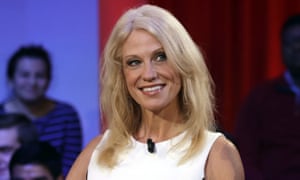
Kellyanne Conway, counselor to Donald Trump, who used the phrase ‘alternative facts’ during an interview.

The article focuses on the recent controversial topic of Fake news and how one of the biggest initiative to battle this has been to set up "fact checkers". These fact checkers aim to find reports with less then viable sources and debunk false claims or exaggerated narratives. However, the article specifically focuses on the fact that although fact checking is a huge part of the war against fake news, it is easily going to get manipulated by those in power in order to push across their own specific agendas that either regect alt-right or left-wing views depending on their own bias. This is not at all what fact checking is aimed to be, in the case of "Fact Checking Turkey" it has been consistently making reports that support the Turkish governement under the guise of "fact checking".
  • "journalism has to get better at spreading facts; at making its case and showing people what is really going on"
  • US non-profit Media Matters put out a warning to European fact checkers that conservative outlets would attempt to discredit them with attacks on their independence, impartiality and the backgrounds of their staffers
  • US president, Donald Trump, calls news organisations and reporters he doesn’t like “fake news”, so outlets with a reckless approach to the truth will hit back by attacking the fact checker, not the fact.
Personally, I had known for a long time that this was going to happen. The people in power have been up in arms about this issue for a really long time purely for the fact that I believe fake news is taking away their power. However, with the intention to fight back at fake news, they are using their good intentions with the guise of pushing their own biased agenda. This is something that is incredibly worrying and also interesting to note as the majority of people that are worried about fake news are those in power. Why aren't young people up in arms about this issue? Surely because we are the digital generation we should be caring about this issue? The fact of the matter is, we're so much better at filtering false information on the internet rather than the older generation that we do not see this as a huge issue that will affect our generation.

Monday, 20 February 2017

Identities: Feminist theory and blog task

How might this video contribute to Butler’s idea that gender roles are a ‘performance’?
Butler's idea that gender roles are a "performance" is due to the fact that that male and female behaviour is socially constructed rather than the result of biology. This is evident in Beyonce's video as she is shown to be doing stereotypical domesticated activities such as cooking. However, her inability to correctly do these activities reinforces Butler's idea as it her inability to do so could be down to the fact that it his not in her biological capability and as such she feels she is not a part of the society that she is aware of.

Would McRobbie view Beyonce as an empowering role model for women? Why?
McRobbie would definitely view Beyonce as an empowering role model for women due to the fact that the in the music video there is a lack of male presence which could show that she is the main focus of the video and therefore helps to empower her as she is confident in her sexual side and is willingly sexualising herself positively. Furthermore it can also be interpreted as Beyonce is shown to be attempting stereotypical domestic activities of a woman but is unsuccessful in her attempts and could go to show that these stereotypes are not the only thing about women.

What are your OWN views on this debate – does Beyonce empower women or reinforce the traditional ‘male gaze’ (Mulvey)?
I personally think that Beyonce empowers women but also reinforces the traditional "male gaze". She does this in a very unique manner as her videos have overt sexual tones that help to create profit through the theories of Mulvey and the male gaze, but also due to the fact that not only men view her as sexual appeal, so do women as they aspire to be like her. However, the difference between Beyonce's work and other work with overt sexual stereotypes towards women, she adds a touch of empowerment to her work by creating work that does not completely follow the same conventions but rather challenges them in artistic manner, which then in turn means that her work is both empowering but also reinforcing a male gaze in order to maximise profits, but then again you could argue that the fact that she is able to work the system in such a way is empowerment in itself.

Wednesday, 15 February 2017

15/02/16 - How good journalists can face down fake newsmongers

https://www.theguardian.com/commentisfree/2017/feb/12/good-journalists-face-down-fake-newsmongers-donald-trump-sean-spicer


the late Hans Rosling

The article focuses on the recent case of Fake news that has been highly present in media the past few months. Interestingly enough it offers a much more analytical and statistical approach on the war against Fake News. The article proposes the ideology from military strategies as it states that the war against fake news is purely boiled down to "narratives vs facts". The mainstream media is genuinely not doing enough to hold the Trump administration to account and it can do so by focusing more on narratives rather than facts and textual media. This is due to the fact that the masses no longer want long drawn out texts that are written by journalists but rather narratives that can be packed into images and videos and shared across social media.
  • "The mainstream media can fight back against the poisoning of our public sphere by giving people narratives they can understand"
  • "We now have to reckon with artfully faked opinion as well."
  • The first thing, wrote Adam Tinworth, is to recognise the real nature of the war in which journalists are now involved. 
  • Among the many sites on the web that relay high-level commentary on foreign affairs is the Center for Global Strategic Monitoring 
  • In order to carry out this laudable mission, the site lists an impressive stable of “experts”

Personally, I definitely agree with the way the article talks about the best way to tackle fake news. I genuinely believe that although fact checking is a step in the right direction, it is ultimately not enough to take down the beast that is Fake news. I wholeheartedly agree that the alt-right has had a much easier route of sharing narratives in the form of videos and images across social media to spread a message compared to the generic facts and texts journalists are making. I genuinely believe that positive attitudes and narratives would essentially be a way to beat fake news at it's own game.

15/02/16 - Twitter loses ad revenue despite gaining 2 million users and Trump 'boost'

https://www.theguardian.com/technology/2017/feb/09/twitter-loses-advertising-revenue-rise-users-shares

Donald Trump holding a mobile phone to his ear

The article focuses on the fact that Twitter, the social media giant has reported an approximate $460 million loss in 2016. The Chief Executive and Co-founder has also reported that this huge loss has been due to the fact that the social media website has suffered a huge decrease from advertising income despite having previously stated that the "impact and influence" of Twitter is huge due to Donald Trump boosting its power. The article also talks about the fact that investors are uncertain as the company is experiencing considerable losses despite cutting almost 10% or 350 workers out of its staff.
  • Twitter reveals $457m loss for 2016
  • The tech company suffered a decline in advertising income
  • Jack Dorsey, chief executive and co-founder, hailed the growing “impact and influence” of Twitter, saying the US president had “boosted the power” of the service.
  • The tech company is still making sizeable losses, falling $457m into the red during 2016 despite cutting 9% of its workforce, or about 350 people. 
Personally, I think this is an interesting case. I definitely agree with Dorsey's statements that social media website has huge amounts of impact and influence. However, it cannot have this influence if there are no users actually partaking in the website's activity which would therefore result in greater decreases in advertising contracts and incomes and therefore result in huge losses for the company. In the case of print media, it was the huge lack of advertising income that genuinely led to it's rapid decline. I personally think that the same reason why Dorsey is happy with Donald Trump "boosting" the services is also the reason for his demise, as many people are probably leaving the service as a protest to Donald Trump or to put it simply, they just don't want to listen to him anymore.