Wednesday, 28 December 2016

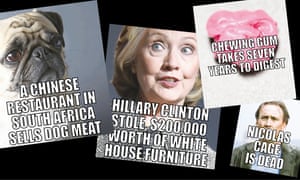
28/12/16 - Czech Republic to fight 'fake news' with specialist unit

https://www.theguardian.com/media/2016/dec/28/czech-republic-to-fight-fake-news-with-specialist-unit

Czech Republic, Prague, cityscape with Charles Bridge at dawn

The article talks about how the Czech government is setting up a specialist unit which focuses entirely on battling the fake news that has been popping up on the internet lately and have had a huge lasting impact on current affairs such as the Trump election. This unit is said to be created in order to focus heavily on confirming facts and removing misinformation as much as possible.
  • The Czech government is to set up a specialist “anti-fake news” unit as officials attempt to tackle falsehoods, predominantly about migrants
  • Claims have also been made of Russian cyber activity aimed at influencing last month’s US presidential election in favour of Donald Trump.
  • The new “anti-fake news” centre has drawn accusations that it will result in censorship, spying and a crackdown on free speech
Personally I think its is interesting how the politicians and people in power are actually starting to care about the way fake news is infecting the internet. Fake news and certain rumours have been on the internet for a really long time, its actually the every day persons and moderators that have been spending their time to regulate and mediate the information being posted. Now that fake news has been exploding so much to the point where it can impact an entire outcome of an election; politicians are finally starting to crack down on this huge issue purely for the fact that it affects them now. In the past, fake news used to be little rumours about celebrities but now they're fake news about huge players in big current events which mean that they affect society a whole lot more than they used to. It's good to see that those in power are working together to fight this, but it should be noted that the way the "anti-fake news" teams work should be consistent, as if these units go too far, it could lead to censorship. 

28/12/16 - Why is Mail Online going after the fact checkers?

https://www.theguardian.com/media/2016/dec/23/why-is-mail-online-going-after-fact-checkers-snopes

Snopes started out fact-checking urban myths but became a resource for calling out false stories.

The article talks about the latest in how the Mail Online has been targeting the fact checking website called Snopes. The website aims to fight rumours and urban legands by citing accurate sources in order to get rid of misinformation. Recently, the Mail Online has been publishing articles regarding this website in a negative perspective and did this by posting the Snopes' founders finances and relationships.
  • Mail Online published a lengthy investigation into fact-checking site Snopes 
  • In a prominent position on the Mail Online homepage, was a 1,400-word article about Snopes’ founders’ finances and relationships.
  • Snopes was named, along with ABC News, the Associated Press and other fact-checking websites such as Politifact.com, as one of the third-party sources Facebook would use to help it flag disputed stories.
Personally, I think it is an intriguing state of affair. The Snopes website has been increasingly helpful to society and digital media as a whole as it aims to battle the fake news that has recently been cropping up in huge numbers. A lot of trusted news brands have been commending the works of Snopes' especially Facebook to the extent that they are willing to use the data created by these websites to help with their own companies. The fact that the Mail Online has resulted in targeting Snopes' founder with slander and dirty tactics only tells me one thing, whatever work that Snopes' is doing, they're doing it right.

Wednesday, 21 December 2016

21/12/16 - O click, all ye faithful: church expands online in 'paradigm shift'

https://www.theguardian.com/world/2016/dec/21/o-click-all-ye-faithful-church-expands-online-in-paradigm-shift

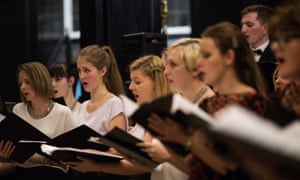
A carol service

The article focuses on the latest trend of creating websites, social media in order to reinforce a digital presence. This is something that has been lacking in the 21st century with many religious organisations lacking in the technological knowledge or even the following online in order to create services for their religion. This is something that the people in charge have realised and are creating an online presence in order to widen their message.
  • The C of E has launched a website, A Christmas Near You, with details of more than 34,000 carol services across the country
  • The Dalai Lama has 13.1 million followers; Justin Welby, the archbishop of Canterbury, clocks in at 98,000.
  • Christians all over the world can follow daily Bible readings and prayers online via services such as Pray as You Go, an app pioneered by the Jesuits 10 years ago.
  • Church of Scotland this month launched an online advent calendar featuring a series of videos covering issues such as refugees and domestic violence. It expects 250,000 viewers by Christmas Day.
Personally, I think it is fantastic. Religious organisations have never had a solid online presence and it is something that is crucial I believe in order to spread knowledge and fight ignorance. I believe that if more religious groups are creating newer modern websites with greater details and information, they will be able to create an interest in people and possibly fight extremism. 

21/12/16 - How TV news failed to keep up in 2016

https://www.theguardian.com/tv-and-radio/2016/dec/19/how-tv-news-failed-to-keep-up-in-2016

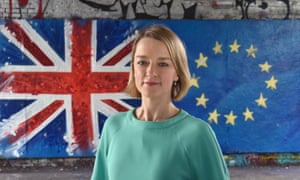
Laura Kuenssberg’s Brexit: The Battle for Britain

The article talks about how the latest generation has currently stopped using TV as its primary source of news for many current events. In the case of Brexit, there were many documentaries and television shows created by institutes such as the BBC which didn't result in a lot of people, especially young people, being informed. Laura Kuenssberg’s Brexit: The Battle for Britain was a documentary that was well received but some critics claimed that it had little to not affect and was actually created too late.
  • Of the 18- to 24-year-olds surveyed by the Reuters Institute for the Study of Journalism, 28% cited social media as their main news source, compared with 24% for TV
Personally, I think it's an interesting debate as I believe that just like the print platform, the television platform will soon be demolished by on demand services such as Netflix. Young people are a lot more likely to use these services as they are no longer restricted to time constraints. For example, I personally wasn't interested in watching "Designated Survivor" on Netflix as each episode was released weekly, instead I personally watched "The Crown" where the episodes where all released in one go. 

Tuesday, 20 December 2016

News on the Tweet

Why are respected news brands good news for Twitter?
Respected news brands are very important for social media such as Twitter. This is because of the fact that theses news brands are actually trusted organisations with respectable and professional mediation in place in order to make sure that the information is as accurate as possible. This especially helps to increase the accuracy of many online sources and news outlets especially such as the ones like Twitter which have little to no gate keeping due to the citizen journalism. This would in turn have a positive effect and growth on the ad revenue for Twitter and other social media.

Why in turn is Twitter good for respected news brands?
Respected news brands and organisations are very good for Twitter for the fact that it helps them to create greater ad revenue, but more importantly also because the social media platform allows news brand followers to easily communicate with their favourite news brands. This is a feature with social media that would otherwise not be available in print platforms. In the report it states that 60% of news brand followers say that Twitter gives the man opportunity to engage with news brands.

The report suggests that old and new media “are not, in fact, in direct competition, but often work extremely well together to enhance both the media eco-system and the consumer experience”. What evidence do they provide to support this idea? Do you agree with it?

It can be argued that the old and new digital medias are actually in direct competition due to the fact that there has been a greater increase in traditional platforms such as print declining in large numbers with the downsizing of newspaper institutions due to a reduction of ad revenue. However, the reason for the fact there could be no visible competition is due to the fact that the traditional platform institutions are actually evolving by moving a lot of their investment into digital media and therefore work hand in hand with social media platforms to generate ad revenues, e.g. Mail Online.

On page 24/25 of the report, the focus turns to 'gossip' or 'banter'. What example tweets from journalists are used to illustrate this? 

  • "Do these pants make Kim Kardashian’s bum look big?" -Daily Mail Celebrity
  • "The most amazing thing about the story of President Hollande having an affair is that he apparently only has one pair of shoes." -Caitlin Moran
  • "Biggest cheer at the Emirates tonight by #AFC? To an announcement for the MUFC away fans that no more trains leaving Euston." -Tom Newton Dunn
Do you think the increasing amount of 'gossip' or 'banter' is harming the reputation of news and journalists?
Personally, I think that the increasing amount of gossip or banter is actually harming the reputation of journalism. This is due to the fact that journalism is no longer seen as a reputable profession due to the fact that institutions have sacrificed integrity and prioritised sales. This means that they would report on softer news such as gossip which sells a lot more than hard news.

What does the report say about trust in Twitter and journalists (look at pages 34-39)?
Do you think new and digital media developments such as Twitter have had a positive or negative impact on traditional newspapers?

It can be said that developments in new and digital media has resulted in positive impacts in the media industry. This is especially evident as there has been a greater empowerment in the audience as there is a lot more citizen journalism. Using the actual eye witness of the event means that news can be broken a lot quicker and which means that news institutions can greatly benefit from new digital media such as Twitter.

Finally, how can we link this report to the vital current debate regarding fake news and Facebook? Do traditional news brands need protecting to ensure there are sources we can trust?

Due to the rise in fake news, tradition news brand need to work a lot more harder now to introduce a form of mediation in the way that they source and create news online. The social media platform results in a greater lack of mediation combined with the way citizen journalism works, it gives a lot more empowerment to users in terms of creating and producing news, a power that once belonged to professionals that is now in the hands of those that can use it to their own advantage rather than the advantage of society.

Monday, 12 December 2016

Globalisation and fake news

The Guardian & the global problem of fake news

What similarities do you notice between the different countries outlined in the article and their problems with fake news?
A lot of countries are experiencing the same issues which come with a greater amount of concentration in fake news, countries such as Italy, Germany, India, France. All of these countries have experienced the spreading of false information in a political sense, like the ones spread during the US election, they are aimed at creating civil and public unrest as well as moral panic in order to sway public opinion through fear and ignorance in order to get a much more negative result. Despite many of these claims being clearly ousted by experts to be false, many of these news articles are already widespread quickly enough to create mass hysteria to the point where many people have already made up their mind.

Is fake news an inevitable consequence of the "culture of freedom and innovation" that the internet has brought with it? Is there a way to stop it?
I personally think fake news is an inevitable consequence of the fact that everyone everywhere now has the freedom and innovation to openly express their opinions whether those are positives or negatives. I also think that many people in society still consider everything they see on the internet to be an absolute certainty, this is something that can be argued is due to the fact that the internet is still infact in it's prime, with it being only a few decades old. There will have to be greater mediation in the internet, enough to prevent fake news swaying public opinions but not enough to restrict and limit the free speech that the internet provides.

New York Times and the creation of fake news

Which fake news stories were particularly successful for Beqa Latsabidze, the 22-year-old student in Tbilisi, Georgia, who tried to make money from web articles on Trump?
The fake news stories that were particularly successful for Beq Latsabidze, were all related to and about Donald Trump. The articles regarding Donald Trump, whether they were real or fake, yet mostly fake, would drive up traffic significantly and therefore ad revenue sales.

How much can Facebook and Google be blamed for this global rise in fake news?
To a huge extent, Facebook and Google can definitely be blamed for the global rise in fake news. Significantly speaking, in this new era of technology, it's Facebook and social media where a lot of people online now go to receive their news. This means that it is Facebook's duty to make sure that the news that is shown through their algorithm on the front page is properly sourced rather than showing all the posts regarding that piece of news like it does right now.

Globalisation: taking it further

Globalisation case study

Why was Google Glass controversial?
Google Glass was considered controversial due to the fact that it allowed little to no privacy for people surrounded by the technology. The technology was able to film both video and sounds at great capabilities, which raised a lot of concerns for the public as it meant that people could record other people without their permissions at any given time.

What are the positive elements to Globalisation that the article highlights?
The article highlights the fact that due to globalisation, the world has become a lot more accessible as people are greater enriched with the benefits of knowledge and information. This is due to the fact that the internet has led to a rapid rate of expansion for globalisation as it induces greater inter connectivity between people across the world within minutes. This would lead to society as a whole becoming a lot more empowered as there is less ignorance and people make better well informed decisions based on new information.

What are potential negatives to Globalisation?
The article also highlights potential negatives which are caused by globalisation. It highlights especially Pareto's law, as the article states how the masses are using the services created by a small minority of corporations in power. This would lead to greater debates and issues into ownership as many people can argue that those same small percentages of corporations can distribute the world's wealth however they please.

What is a techno-panic? How does it link to moral panics?
A techno panic is the fear, like moral panic, is linked to a change that many people would consider to be a threat to society as a whole. However, techno panic focuses more on the fact that the panic centres on fears regarding specific contemporary technology or technological activities. It should be noted that often the threat on society could be exaggerated and is generally done with the intent to sell more newspapers or products.

What is your opinion on the privacy debate and major corporations being able to access large quantities of personal data?
Personally, I think it is awful and unnecessary that major corporations such as Google are able to access large quantities of users personal data. It is reasonable to use specific user data securely in order to improve their own services, however it is completely unreasonable for all of a users data to be access by the major corporations. It is especially worrying due to the fact that many of these corporations are transnational corporations which are very easily able to circumvent government legislation in order to use loop holes and get away with whatever they want to do.

Globalisation and capitalism

Who coined the phrase 'a global village' and what multinational companies illustrate this?
The phrase "global village" was coined by Marshall McLuhan. It defined the aspect that countries were becoming a lot more interconnected and more independent in terms of their economies. The multinational company Coca Cola illustrates this idea of the world becoming a global village.

What role does Slavoj Zizek suggest the media plays in global capitalism? How can you link this to our previous work on Marxism and Hegemony? 
Slavoj Zizek argues that the media has a huge influence in the way global capitalism works. He argues that the media reinforces the ideology that making money is the right way of conducting businesses, but at the same time allows people to feel less guilty about how these goods are produced.

What does 'capitalism with a conscience' mean?
This was a term created by Zizek that argues that western culture has actually turned social activism into a profitable business model. He argues that global media has raised awareness about social issues by creating campaigns that also sustain western capitalist dominance. For example, the Starbucks campaign using Fairtrade.

What is the (PRODUCT) RED campaign?
(PRODUCT) RED was a campaign created in 2006 by Bono, the lead singer of the band U2. It was created with the sole intention to raise awareness and funds to help eliminate AIDS in Africa. The campaign consisted of creating a brand and logo that many corporations would use to create products using the campaign's branding. This was incitement for the corporations as it encouraged greater profits. A percentage of the company's revenues and profits would go to the Global Fund to Fight AIDS.

Based on what you've read in the Factsheet, what is YOUR opinion of the (PRODUCT) RED brand? Is it a positive force helping to fight AIDS in Africa or a cynical attempt to make multinational companies look more ethical than they actually are? 
I personally think, the idea for the campaign had its strengths but most largely it had a lot of negatives. The marketing had a lot of negative connotation regarding people living in Africa, such as, the black African has to be saved by western society. However, I do believe that the campaign worked in favour of raising awareness for a cultural issue that could be a huge factor to poverty. If instead of a small percentage of the company's revenues, the entire profits of the (PRODUCT) RED products made by the corporations would go to the Global Fund, then perhaps it would encourage a lot more positivity as it meant all proceeds would be used, rather than just a small percentage of the company's profits.