Wednesday, 30 November 2016

30/11/2016 - German spy chief says Russian hackers could disrupt elections

https://www.theguardian.com/world/2016/nov/29/german-spy-chief-russian-hackers-could-disrupt-elections-bruno-kahl-cyber-attacks

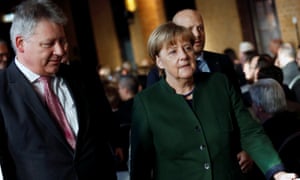
Bruno Kahl, president of the German Federal Intelligence Agency, and Chancellor Angela Merkel.

The article talks about how Germany's head of foreign intelligence service has stated that the UK's general election could be targeted by Russian hackers with the intention to spread misinformation and lies in a bid to sway voters to a specific party. He talks about how Germany's intelligence services has reason and evidence to believe that cyber attacks are occurring with the sole intention of creating political uncertainty and that Russia may have been behind cyber attacks during the US Election.
  • "Russia may have been behind attempts during the US presidential campaign to interfere with the vote."
  • In 2015, an attack on internet in the German parliament was blamed on Russian hackers by German intelligence. 
  • A report published this month by the Atlantic Council on Russian Influence on France, Germany and the UK, pointed to an extensive Russian “disinformation campaign” being carried out in Germany, which it said had “opened opportunities for the Kremlin to influence German politics and the public debate”.
Putting aside the politics of the situation, its very interesting to note how new digital media and new technology have had such a huge impact on the way society perceives politics and current affairs that in some cases it's power can be taken advantage of to create uncertainty. Many including the article speculate the ideas of how cyberwarfare will increase in the future as there have been a greater amount of cyber attacks and concern for privacy in the past and most likely in the future. 

30/11/2016 - Here's the truth: 'fake news' is not social media's fault

https://www.theguardian.com/media/greenslade/2016/nov/23/heres-the-truth-fake-news-is-not-social-medias-fault

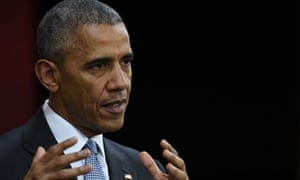
Barack Obama: ‘everything is true and nothing is true.’

The article focuses on the recent controversial issue of fake news during the US election and the EU referendum and how the circulation of these fake news resulted in negative outcomes. The article creates an alternative perspective on the fact that a lot of people have been criticising social media as the reason for the increase in fake news being generated, which Greenslade argues is not true. He does however give credit to the theory that social media allows for greater and faster spread of the fake news.
  • "Last week, the students’ union at City, University of London passed a stupid motion banning the Sun, Daily Mail and Daily Express from the campus"
  • None of the 500 or so students currently studying journalism at City voted for the motion.
I personally agree with Greenslade, it is not the social media outlets that are actually creating the fake news, but the power of voting amongst users which allows greater spread and views for these fake news websites. However over exaggerated a news story might be it will be a lot more likely to pick up more hit counters or likes and spread, which means that the truth would be buried amongst the lies a lot quicker than it would for example traditional media sources.

Marxism & Pluralism: Alain de Botton on the news

To what extent do you agree with Alain de Botton's views on the News?
Personally, to some extent I do agree with Alain de Botton's view on the way the news industry works. Through the process of gatekeeping and mediation, news institutions tend to leave out information which is then not presented to audiences. Furthermore, this starts to in a way funnel the type of information that audiences consume. I also agree that in the modern age, it has become increasingly more difficult to get audiences to care about news and current affairs that would be beneficial as information, as opposed to news that might be purely for entertainment such as celebrity gossip. I personally think this could be due to the fact that audiences have now got a lot more control in what they consume and an increase in soft news would be dominant over hard news.

How can you link Marxism and Hegemony to de Botton's criticisms of the News?
Alain de Botton's views are very critical of the way news works and the content it outputs to the audiences. This can be especially linked to the ideologies of Marxism and Hegemony as they instill the idea that news is dumbed down in order to create as much of an audience turn out as possible which would create greater profits rather than hard news that is a lot more critical and creates greater autonomy.

How could you use Pluralism and new technology to challenge de Botton's views on the News?
The pluralism ideology focuses more on the idea that there is greater freedom amongst audiences and society. The use of new technology allows this and reinforces the thinking behind the ideology. Newer technology allows the audiences to have a lot more power and freedom in what they consume, which proves that news and media is not used for social control by the government but rather as a way for audiences and society to gather whatever information they want whether that is soft or hard news.

Choose two news stories from the last six months - one that supports de Botton's views and one that challenges his belief that the News is used for social control.
Supports: http://www.bbc.co.uk/news/health-38146394
Argues: http://www.bbc.co.uk/news/world-us-canada-38151669

Wednesday, 23 November 2016

23/11/16 - Obama is worried about fake news on social media – and we should be too

https://www.theguardian.com/media/2016/nov/20/barack-obama-facebook-fake-news-problem

Research has found that 62% of US adults turn to social media for news, yet there is little distinction between truth and lies.

The article talks about in question the recent uproar in the way Facebook's algorithms work on it's newsfeeds. It talks about how during the recent US elections, many of the content shared by users on the website was in fact actually fake news. Since then, a lot of websites such as Facebook and Google have decided to crack down on the amount of fake user generated content which tends to spread quicker than legitimately sourced and cited content. This controversy is notable with the articles by the "Denver Guardian" a fake news website which aimed to piggy bank on the notoriety of the regional "Denver Post" to the point where the latter had to write a disclaimer that the former was a fake website. 

  • 62% of US adults now turn to social media for some or all of their news, according to the Pew Research Centre
  • "Of all the content on Facebook, more than 99% of what people see is authentic"
Personally, it's a very interesting controversy to keep track of in the rapidly expanding industry of the media. The way news has worked has always been varied on the internet, we've always been told never to believe what we are told on the internet yet we as a society have completely disregarded this rule that our parents told us growing up and have ultimately put the same people in power that fed us these lies. Or have we not? It can be argued that the people that put these in lie upholding politicians into power are not the digital natives that grew up not trusting whatever they read on the internet, but the millennials and baby boomers, who, for most of their adulthood didn't experience the internet until the last decade, and have yet to experience that what they read on the internet cannot be trusted. Perhaps the fact that electing someone like Trump or voting for Brexit will be their crude awakening to that cold fact.

23/11/16 - In the new robopolitics, social media has left newspapers for dead

https://www.theguardian.com/commentisfree/2016/nov/18/robopolitics-social-media-traditional-media-dead-brexit-trump

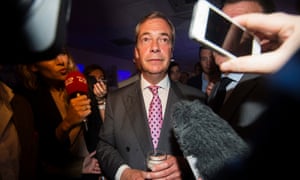
Nigel Farage awaits the result of the EU referendum vote: ‘Campaigners used controversy to engage directly with electors via social media, shrugging off the questions of sceptical journalists.’

The article talks about the way social media played a huge part in the way politicians and campaigners targeted the populace in an attempt to get their messages across. Specifically speaking, sites such as Facebook and Google have specially crafted algorithms which make targeting and marketing to specific demographics incredibly specific as well as easy. This was the main reason why the internet left many traditional platforms in the past and paved the way for the future in terms of ad revenues. Brexit's lead campaigner admitted in an interviewer how social media was a far more efficient and cheapest way of getting the message of the campaign across rather than traditional platforms.
  • Leave campaign turned to Social media for advertising rather than traditional platforms which would have cost £5-10 million
  • Messages were tested for their ability to motivate people to vote.
I personally think the way politicians decided to use the social media to their advantage was very clever. However it is also important to note the dissolving of real life journalism, which can be seen as it can be argued that due to the seamless non stop flow of social media, there is no mediation and therefore no filter. It doesn't actually matter if journalists would call out the claims made by campaigners and politicians to be true or false, the fact that a controversy would be made in the first place would be enough to create momentum for their campaign.

Monday, 21 November 2016

NDM: Marxism, Pluralism and Hegemony

Research the Ian Tomlinson case. What would the traditional, hegemonic view of the police be in a case like this? How did new and digital media create a different story? What does the police officer's subsequent acquittal suggest about the power of new and digital media?
The traditional hegemonic view of the police in this case would be that they knew best at the time, as they were the peacekeepers and had power over the protest situation. However, the new evidence in the form of digital media challenged these hegemonic views and showed audiences how those with power are not always right. The acquittal of the police officer suggests the regain of power and hegemony to the people, it is a democratic view that allows the people to question those in power. It also shows that new and digital media arms society and those without a voice as a weapon in the war against unjust hegemony.

What does the author argue regarding whether hegemony is being challenged by Web 2.0? 

The author argues that hegemony is being challenged by Web 2.0 in the sense that the ruling classes and institutions no longer have the power and control over the lower classes that they once had, this is hugely due to the fact that the internet has given the voiceless a platform to voice their opinions, therefore leveling the playing ground for voicing opinions.
In your opinion, does new and digital media reinforce dominant hegemonic views or give the audience a platform to challenge them?

I personally think that new and digital media actually challenges hegemonic views quite regularly as platforms such as social media gives everyone the chance to voice their opinions especially those without power. Furthermore, if you are someone with a lot of power you have no advantage over those that don't on the internet. Services such as WikiLeaks also work strongly to hold hegemonic powers to account by leaking to the masses the private and illegal workings of corrupt governments.

Do recent world events such as Brexit or Donald Trump's election in the US suggest dominant hegemonic ideologies are being challenged or reinforced? There are arguments for both sides here - explain your opinion and why.

It can be argued that the outcome of Brexit and the US election were both unexpected in the sense that Donald Trump voters and Leave voters were never considered to win by the populace. However through the use of social media, especially in the case of Donald Trump who campaigned vigorously through his Twitter account, it has given the underdog a greater voice, bypassing the barriers of popularity and power affecting vote turnouts. People had the idea to no longer be afraid of their own views and vote for what they believe was right, however shocking or unpopular. 

Wednesday, 16 November 2016

Citizen journalism catch up work

Why is citizen journalism important?
Citizen journalism is important as the power to make and break news has moved beyond the traditional news institutions. This has given audiences a huge amount of power, not even in terms of the fact that they can now choose what they wish to consume, they can have a huge impacting factor on what it is that they are consuming in the first place. Furthermore, institutions generally can't be everywhere at once, by utilising their audiences as citizen journalists, it gives them an upper hand in beating their competition as they would be able to break the news a lot quicker than other people.

What should happen to the police after this incident? 
The police in the video should be held accountable for their actions, especially the officer that resorted to a choke hold. The officers were clearly in the wrong, as they did not care for the safety of Eric Garner at all, he was already restrained and was crying "I can't breath" yet they were still trying to restrain him.

What has happened to the Chelsea fans identified in this video?
The four Chelsea fans identified in the video for their racism are now banned from all future football matches for a period of 5 years.

Why might this type of news appeal to a younger audience?
This type of news is raw and unmediated, it shows the footage being taken from the perspective of someone that was actually there and the shaky cam suggest the danger and real life experience of the event. This is the type of news that would appeal to younger audiences as they are more likely to consume raw unmediated news.

Strengths: characteristics of citizen journalism that give it an advantage over traditional news.
Weaknesses: negative aspects of citizen journalism.
Opportunities: elements that TV News institutions or audiences could exploit citizen journalism to its advantage.
Threats: elements of citizen journalism that could cause trouble for the TV News institution or audience.